
Busbar manufacturability review: How early evaluation can save time and reduce costs
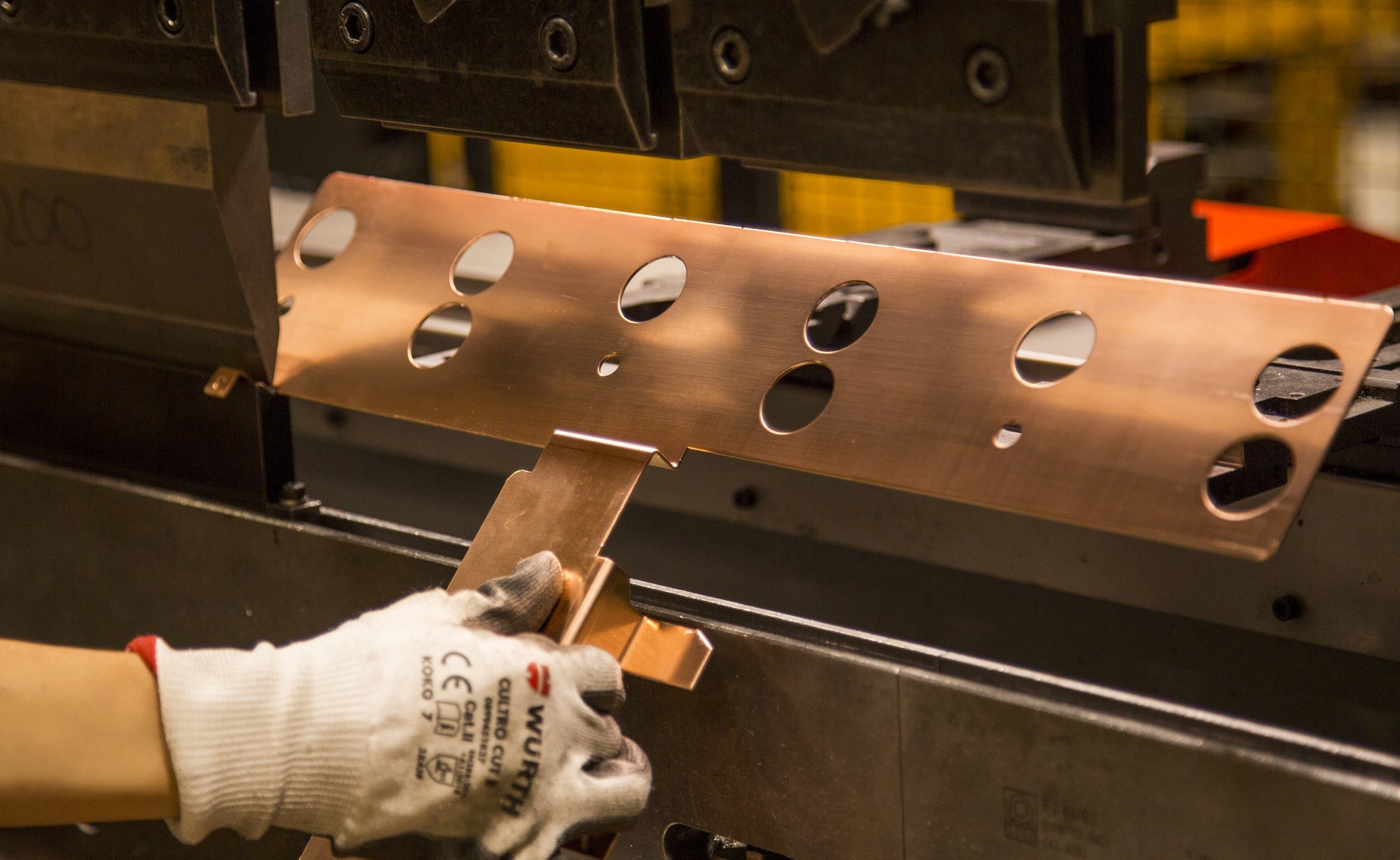
When the feasibility of busbars and sheet metal components is reviewed before the first prototype, design changes can be made while they are still easy to implement. This helps to keep series production costs under control. Even small changes can streamline manufacturing and help keep production part approval on schedule. As production volumes grow, the cost benefits of these early design decisions can become increasingly significant.
Design for manufacturability works best from the first drawings
The best time to check manufacturability is the design stage, before final decisions have been locked in. Involving the production team early allows production methods to be assessed together with the customer’s designers and any necessary changes to be identified in time. This is the core idea of design for manufacturability.
However, the manufacturer often sees a part for the first time only at the quotation stage, when the designs and technical drawings are already complete. Even then, a manufacturability review can identify issues before production begins: the drawings are used to assess production methods, material choices, costs and potential challenges.
The earlier areas for improvement are spotted, the easier they are to resolve. Based on the experience of Finnish busbar manufacturer Seger, more than half of the drawings reviewed contain areas for improvement.
What happens if a problem is only found at the PPAP stage?
The busbar can still be changed after prototyping, as the design may not be ready for series production. The situation changes when the project moves on to industrialisation and the Production Part Approval Process (PPAP).
If the intended methods cannot produce the part as specified in the drawings, the PPAP stage may be delayed or halted. At worst, the entire product development or industrialisation project is delayed, which always costs the customer time and money. When the manufacturability review is carried out carefully at the start, time and resources are saved at the PPAP stage.
How the manufacturability review works
The manufacturability review starts when the manufacturer receives a technical drawing of the part or busbar in PDF format, together with a STEP or other 3D model file. Based on these, they assess whether the part can be made with the desired production methods. The drawings are worth reviewing from several perspectives so that both the technical implementation and the quality requirements are considered.
The result is a written analysis that also covers individual technical details. The analysis identifies areas for improvement in both the drawings and the part itself. This ensures that the part can be manufactured with the planned methods and proceeds smoothly through PPAP. Depending on the complexity of the part and the scope of the project, the review usually takes from a few days to a couple of weeks.
At Seger, the drawings are reviewed by the sales and technical manager together with the quality team, each from their perspective. A feasibility review of busbars and sheet metal components is also included in the service. The aim is to give the customer a clear picture of what is feasible in practice and which details need attention.
Common improvement areas in busbar design
A common area for improvement is a general tolerance that is too tight: drawings often specify ISO 2768-mK, which is intended for machining. As busbars and sheet metal components are not usually machined, these tolerances can be difficult to achieve in series production, especially for parts bent by hand. When a part is made on a punching machine or by laser cutting and then bent by hand, changing the general tolerance on the drawing from ISO 2768-mK to DIN 6930-m is recommended.
Another area for improvement is hole placement that is too close to a bend line or cut edge: a hole that requires a precise shape or dimensional accuracy may deform during manufacturing and no longer meet its requirements.
How a part’s unit price was reduced by 90%
When a manufacturer of frequency converters in the energy sector began planning a new product family, the decisive work was done before the first prototype was even made. Seger served as the customer’s main partner for the mechanical parts. From the outset, the customer expected production volumes to grow significantly. The aim was therefore to design the sheet metal parts for its power electronics so that they could later be produced using press tooling instead of manual methods.
Seger took part in the design process and gave feedback on the manufacturability of the parts. Based on its recommendations, the designs were modified to suit tool-based series production. Small decisions matter for tooling: in a part with 20 bends, a single bend in the wrong direction can prevent manufacture with the planned tool.
Pricing and cost development were also defined jointly at the design stage, along with a roadmap for the necessary tooling investments and their impact on the unit price. This meant that the customer knew from day one which investments and methods would achieve a given price level as volumes grew.
When the part was made using manual methods, its unit price was €10. With dedicated tooling, it has fallen to around €1. The tooling investment has paid for itself many times over, and the customer has saved millions of euros on the project.
Manufacturability across the product life cycle
Manufacturability is not a one-off check but part of the entire product life cycle. The work starts before the first prototype with manufacturability and cost estimates, risk assessments and a life cycle plan. During prototyping, the first investments in production tooling are made, and as volumes grow, tooling and production development drive the price and cost trend, as in the frequency converter project.
Taking manufacturability into account at the design stage also lays the foundation for long-term collaboration that does not end when series production begins. At best, the partnership continues for decades, and part deliveries can continue even after series production ends. Spare part availability can be secured for 15 years or even longer after the end of series production.
Although product life cycles have shortened in many industries, long-term collaboration remains important. If anything, this underlines the need to plan manufacturing solutions carefully and assess the profitability of investments at the very start of a project. Seger’s life cycle model covers this entire path, from the first drawings to spare parts.
Three things to consider at the design stage
Designers can improve a part’s manufacturability while the drawings are still being prepared. These three things are worth paying attention to.
- Choose the manufacturing method and the matching general tolerance.
If the part is to be made on a punching machine or by laser cutting and then bent by hand, change the general tolerance on the drawing from ISO 2768-mK, which is intended for machining, to DIN 6930-m. - Make sure tolerances on individual dimensions are consistent with the general tolerance.
A conflict arises, for example, when the general tolerance is a tight machining tolerance, but looser tolerances have been specified for individual dimensions. Tolerances should match the part’s functional requirements and the chosen manufacturing methods. - Check the position of holes relative to bend lines and cut edges.
Pay particular attention to holes whose shape and dimensional accuracy are critical. A hole located too close to a bend line or cut edge may deform during manufacturing.
Are you planning a new busbar project or evaluating supplier options?
Contact Seger to discuss your busbar requirements and find out how we can support your project.
Frans Lindstén,
Key Account Manager, Seger Technologies Oy
Phone number: +358 50 302 0393
Email address: Frans.Lindsten@segertech.com